
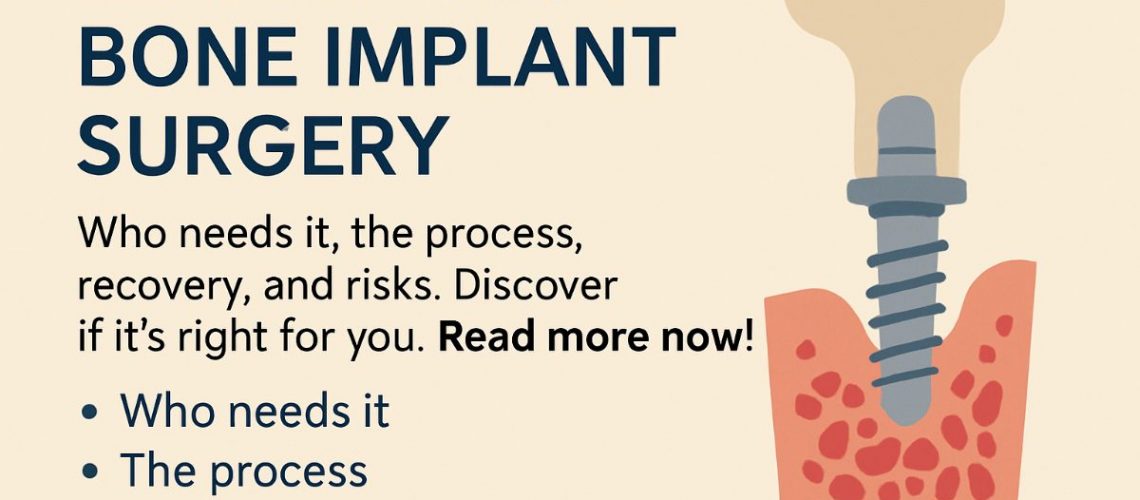
Bone implant surgery can rebuild the jaw when there isn’t enough bone to support dental implants. This guide explains what bone implant surgery involves, who may need it, what happens during the process, recovery expectations, and possible risks and alternatives. Read on to learn whether bone implant surgery may be right for you and what questions to ask before you schedule a consultation.
What Is Bone Implant Surgery?
Bone implant surgery refers to procedures that add or reshape jawbone so dental implants have a stable foundation. Common methods include bone grafts (using your bone or donor bone), sinus lifts for upper back teeth, and ridge augmentation. These steps prepare the mouth so implants can fuse securely to the jaw.
Who Is a Candidate for Bone Implant Surgery?
People missing teeth for a long time, those with significant bone loss, or long-term denture wearers often need bone implant surgery. Candidates should have good oral hygiene and realistic expectations. Your dentist will review dental history, imaging, and overall health to determine if grafting is necessary before implants.
Medical and dental considerations
Certain health issues affect healing and candidacy: smoking slows bone growth, uncontrolled diabetes raises infection risk, some bone medications can complicate surgery, and active gum disease must be treated first. Your provider will assess medications, medical history, and oral health before recommending bone implant surgery.
What to Expect During the Bone Implant Surgery Process
The process typically follows a clear sequence: consultation and imaging, the grafting or augmentation procedure, a healing period, implant placement, and final restoration. Each stage is planned to maximize safety and long-term success of your implants.
Pre-op planning and imaging
CT scans or cone-beam imaging map your jaw in 3D. Digital planning helps the surgeon choose graft size, implant position, and avoid vital structures. Precise planning reduces surprises and supports predictable results.
The surgical visit
Procedures are done with local anesthesia and often sedation. Bone grafting can take 30–90 minutes depending on complexity. The surgeon places graft material and secures it so new bone can grow. You will get detailed aftercare instructions before leaving.
Recovery and healing timeline
Expect mild to moderate swelling and discomfort for a few days. Pain is usually controlled with prescribed or over-the-counter meds. Soft foods for 1–2 weeks help healing. Grafts commonly need several months (3–6 months) to integrate before implant placement.
Risks, Benefits, and Expected Outcomes of Bone Implant Surgery
Benefits include a stronger foundation for implants, improved chewing function, and better appearance. Risks include infection, graft failure, prolonged swelling, or the need for additional grafting. Success rates are high when patients follow care instructions and have good overall health.
Alternatives to Bone Implant Surgery
Alternatives include fixed bridges, removable dentures, or using short or angled implants that avoid grafting. Each option has pros and cons; your dental team will recommend what fits your anatomy, budget, and goals.
How Key Dental Group Approaches Bone Implant Surgery
Key Dental Group offers in-house oral and maxillofacial surgical expertise, digital implant planning, IV sedation options, and minimally invasive techniques to improve comfort and outcomes. Their team coordinates grafting and implant steps so care is efficient and personalized.
How to Prepare and Questions to Ask Before Your Bone Implant Surgery
Bring a complete medical list, follow fasting or medication instructions, and arrange transportation if you’ll have sedation. Ask about the surgeon’s experience with grafts, expected timeline, costs, sedation options, potential risks, and aftercare steps. If you’re considering bone implant surgery, schedule a consultation to review your imaging and options. Call Key Dental Group to learn whether bone grafting and implants are the right path for restoring your smile.